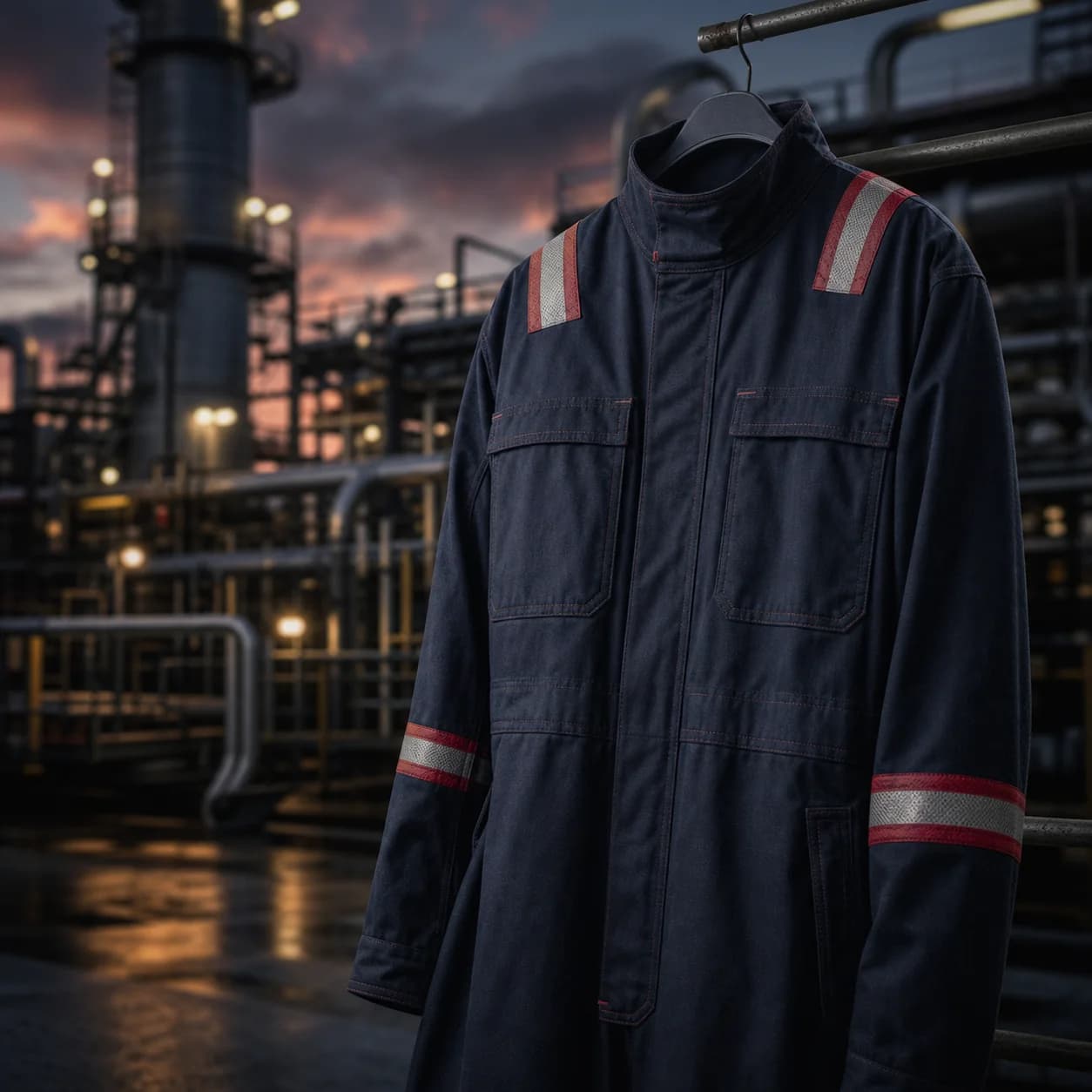
Flash fire hazards show up in environments where crews already have a lot to manage: heat, weather, long shifts, site rules, and changing job conditions. The workwear program has to support the safety requirement without making ordering harder than it needs to be.
A good FR list usually starts with roles. Operators, technicians, drivers, welders, supervisors, and visitors may not need the same garments every day. Once those roles are defined, it is easier to decide what should be stocked, what needs approval, and what belongs in a seasonal or specialty category.
Build the program around how people work
- Daily wear: FR shirts, pants, jeans, coveralls, and base layers.
- Weather gear: FR outerwear, rainwear, sweatshirts, jackets, and cold-weather layers.
- Visibility: hi-vis FR where traffic, equipment, or site rules require it.
- Related PPE: gloves, hard hats, eyewear, hearing protection, boots, and other issued items.
Make approved choices easy to repeat
Too many similar garments create confusion. Workers ask for substitutions, managers approve exceptions, and procurement ends up managing more SKUs than the program needs. A shorter approved list is easier to train on and easier to replenish.
AFR can help source FR garments and organize them into a program that fits the work being done. The buyer still owns final product approval, worker training, care rules, and compliance with workplace requirements.