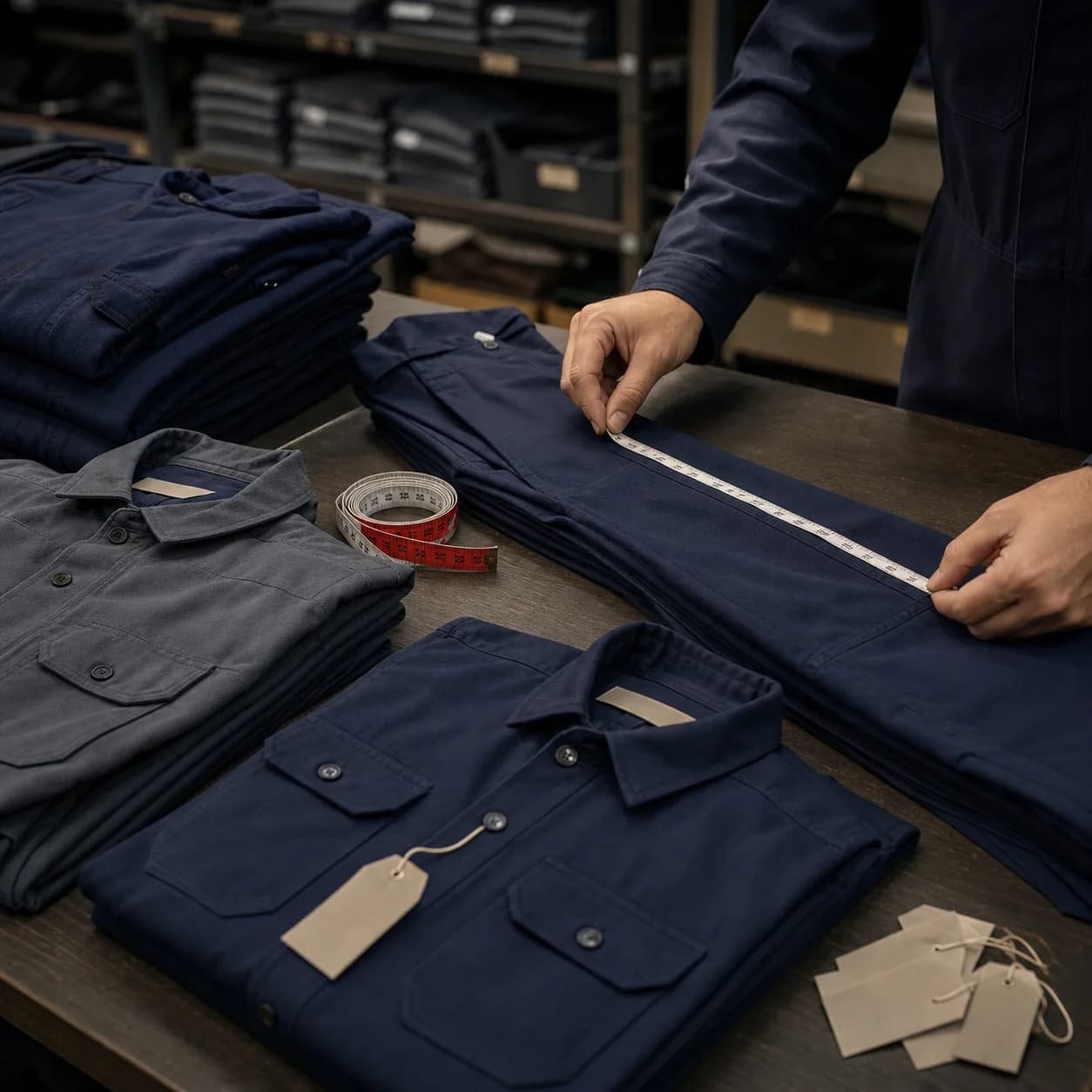
FR clothing has to fit the workday. If it is too tight, workers fight the garment when they reach, climb, bend, or layer. If it is too loose, it can get in the way of tools, vehicles, harnesses, and equipment.
Fit is also one of the biggest reasons workers drift away from approved items. A program can look good on paper and still struggle if the approved styles do not work for the people wearing them every day.
Fit questions worth asking
- Will this garment be worn alone, layered, or paired with outerwear?
- Do workers need tall, extended, women's, or specialty sizing?
- Does the role involve climbing, driving, kneeling, reaching, or wearing a harness?
- Are exchanges and substitutions happening because the approved size range is too narrow?
Standardize without ignoring the field
The point is not to force every worker into the same product. The point is to keep the approved list tight enough to manage while still offering the sizes and styles crews need to do the work.
AFR can help buyers compare size runs, approved styles, and replenishment needs. Proper use, care, fit expectations, and replacement rules should still follow employer policy and manufacturer instructions.