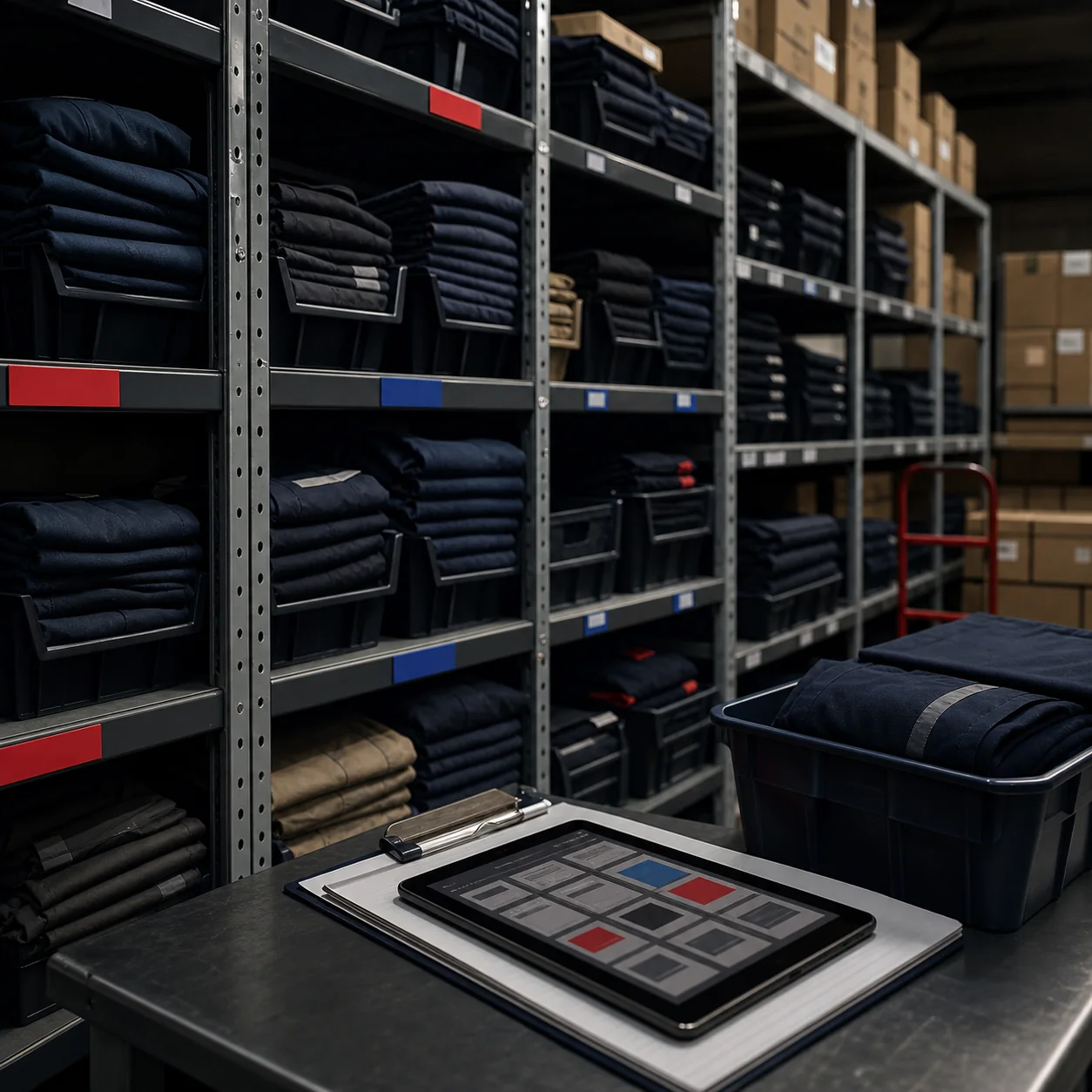
Workwear programs usually do not become messy all at once. A new site adds a jacket. A supervisor approves a different boot. A worker asks for a similar glove. A seasonal item becomes a permanent exception. After a while, procurement is managing a catalog nobody meant to build.
SKU sprawl creates real friction. It slows down ordering, makes approvals harder, complicates replenishment, and gives workers too many ways to order something outside the intended program.
Build around roles
The easiest place to start is with role-based catalogs. Electrical crews, oil and gas teams, construction crews, warehouse staff, drivers, supervisors, and office teams should not all start from the same endless product list.
- Daily essentials: shirts, pants, coveralls, boots, gloves, and eyewear.
- Seasonal items: outerwear, rainwear, sweatshirts, and cold-weather layers.
- Specialty PPE: items that require safety-team review or manager approval.
- Corporate apparel: polos, jackets, hats, and branded uniforms.
Use approved favorites
Approved favorites make the right order easier to place. Exceptions can still exist, but they should be intentional. When the default catalog is clean, managers spend less time deciding whether a substitute is close enough.
Make the rules visible
Allowances, approval rules, replacement timing, and location-specific requirements should be part of the program, not tribal knowledge. AFR can help turn FR, PPE, boots, and corporate apparel into a simpler ordering structure that supports the way teams actually buy.